1897 – Ordnance Survey
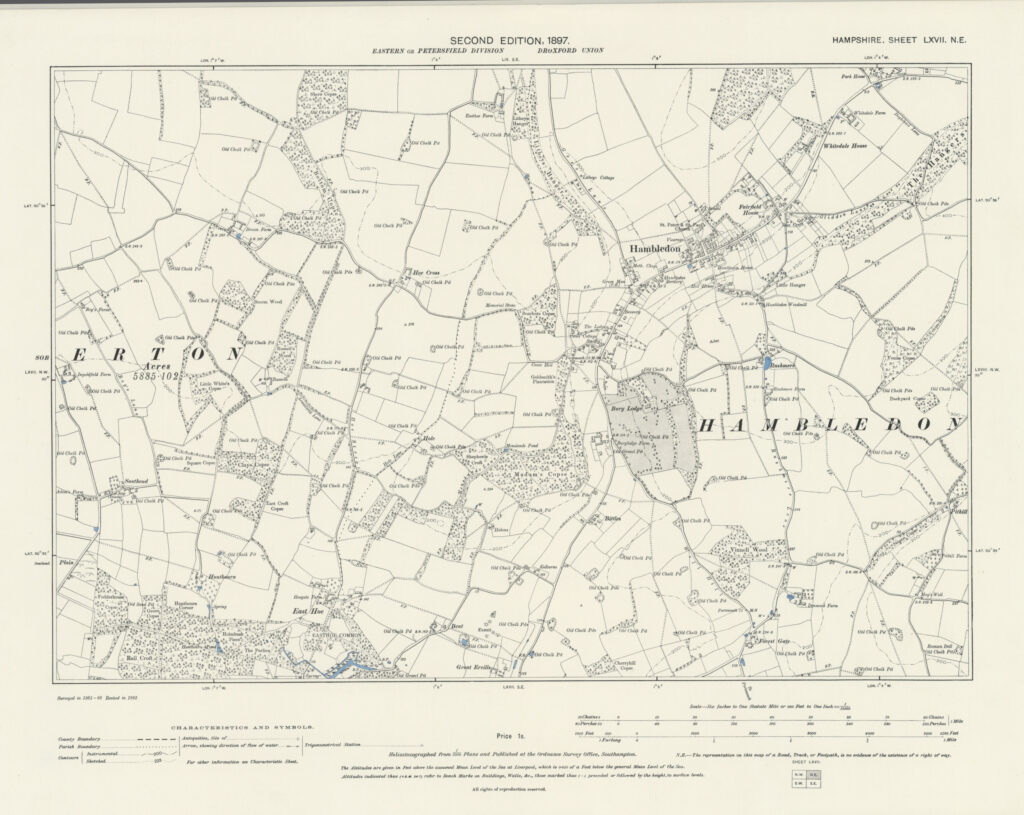
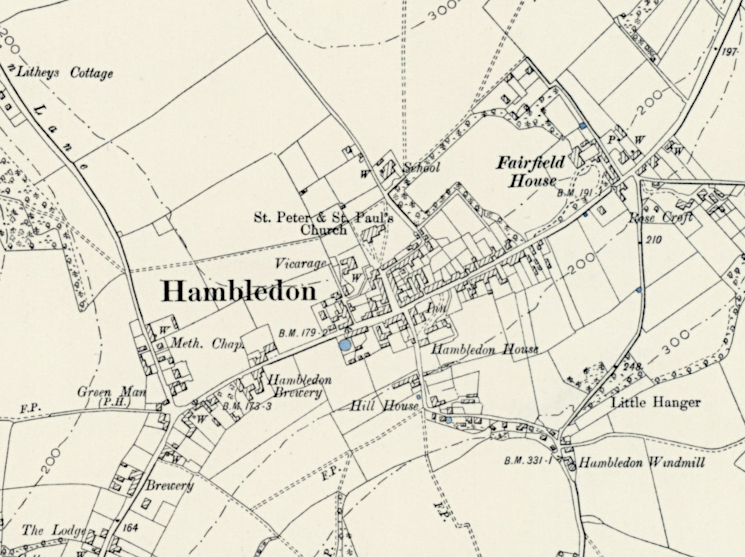
The Ordnance Survey Second Edition maps of Hampshire, published in 1897, were based on a systematic revision carried out in 1895. This revision updated the earlier First Edition large-scale surveys of the county, which had originally been conducted in the mid-nineteenth century. Rather than undertaking a completely new survey, the Ordnance Survey carried out field revision to record changes that had occurred in the intervening decades.
The 1895 revision work involved checking and amending existing mapping to reflect alterations in settlement layout, transport infrastructure, land division, and public works. New buildings, altered field boundaries, railway developments, road improvements, and changes in land use were incorporated before the sheets were reissued as the Second Edition in 1897.
In Hampshire, the Second Edition was produced at the principal large scales used nationally:
– 25 inches to one mile (1:2,500)
– 6 inches to one mile (1:10,560)
The 25-inch maps provided highly detailed representation of the landscape, including:
– Individual houses and outbuildings
– Precise field and property boundaries
– Roads, lanes, and footpaths
– Railways, stations, and associated structures
– Rivers, ponds, and drainage systems
– Woodland, orchards, and gardens
– Public buildings such as churches and schools
Bench marks showing surveyed heights above sea level were marked throughout the sheets as part of the Ordnance Survey’s national levelling system. Relief at these large scales was not generally depicted through contour lines; emphasis remained on accurate plan detail.
By the 1890s, Ordnance Survey cartography followed highly standardised conventions. Engraving and reproduction methods had advanced beyond the early copperplate techniques of the Old Series, and the maps were printed using improved processes that ensured clarity and uniformity.
The 1895 revision date is significant because it indicates the year in which field corrections were made, even though the printed publication date of the Second Edition sheets for Hampshire is typically 1897. This distinction between revision date and publication date is standard practice in Ordnance Survey mapping.
The 1897 Second Edition therefore represents a late Victorian record of Hampshire, reflecting the cumulative changes of the nineteenth century as captured during the 1895 revision survey.